
Electrical & RF · 4 min read
Power Supply & Source Calibration
A power supply both outputs a value and reports one, so its calibration checks two things at once — what it actually delivers, and what it says it is delivering.
Part of our guide to Electrical, RF & Time/Frequency Calibration.
Output and readback
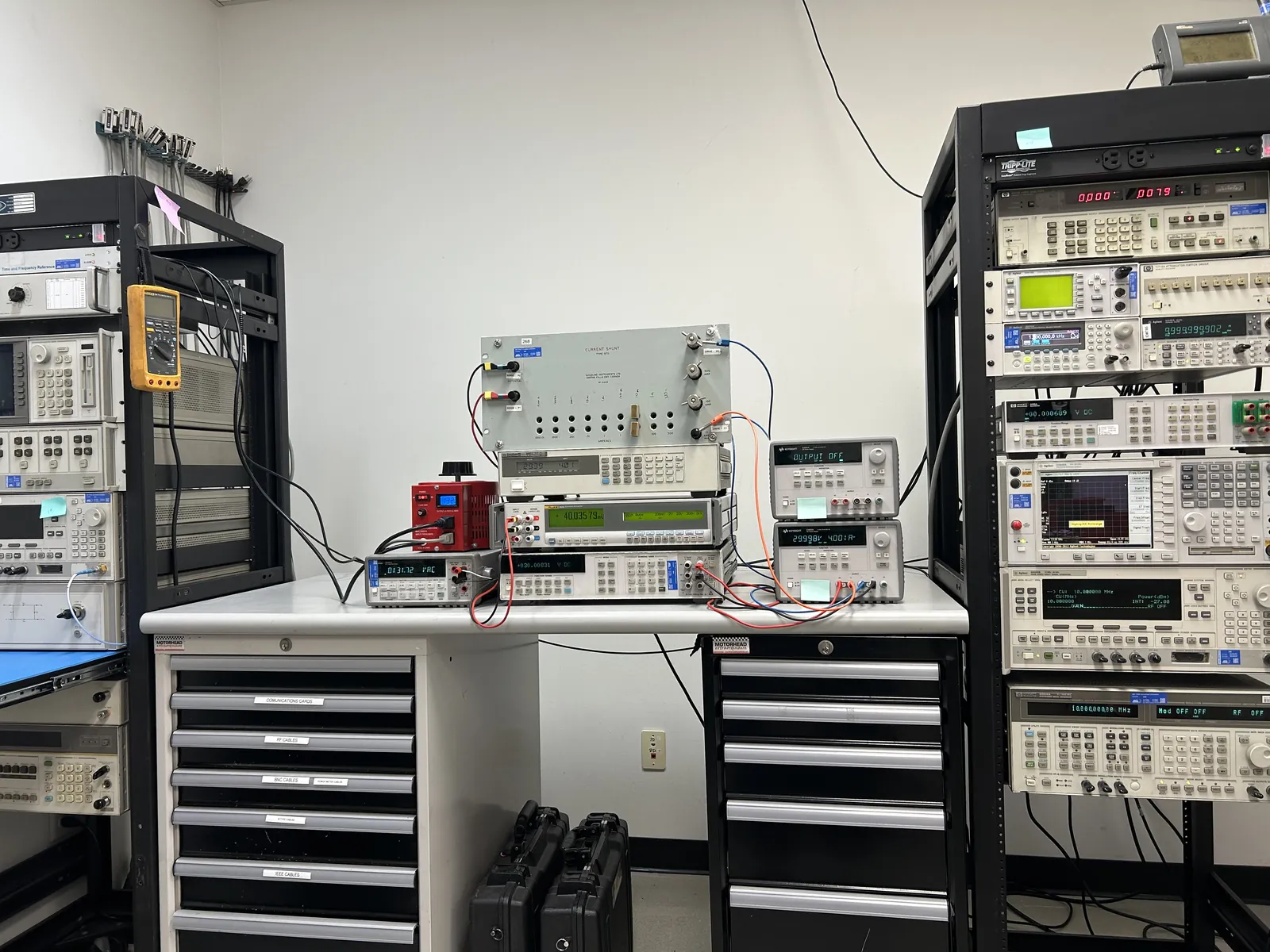
Source calibration verifies the accuracy of what the instrument outputs (voltage and current setpoints) using a traceable reference meter or standard, and — for programmable supplies — the accuracy of the readback the instrument reports. Both matter: an automated test relies on the readback being true.
Loading and setpoints
Because supplies behave differently under load, calibration exercises representative setpoints across the range, and can include load conditions relevant to your use. The certificate should report data at each point with uncertainty and the pass/fail against spec. Discuss any application-specific conditions with the lab up front.
Common questions
Is calibrating a source different from calibrating a meter?
Yes — a meter is checked by feeding it a known input; a source is checked by measuring its output with a known reference. Programmable supplies need both output and readback verified.