
Calibration Fundamentals · 6 min read
What NIST Traceability Actually Means
Almost every calibration certificate claims to be “NIST traceable.” The phrase is meaningful — but only if you understand what it is asserting, because the words alone are easy to put on paper.
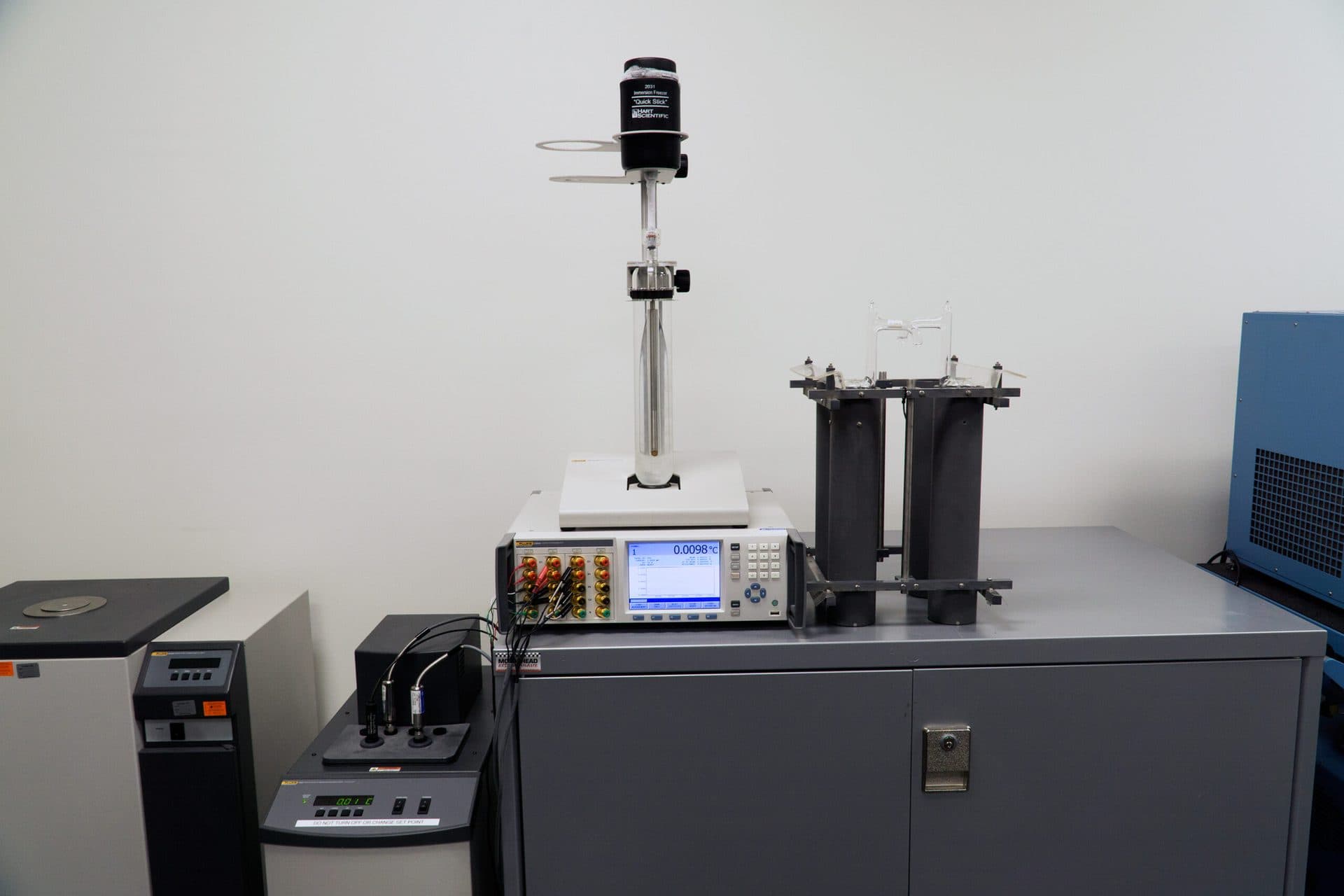
Part of our guide to Calibration Fundamentals: What It Is and Why It Matters.
Traceability is a documented chain, not a logo
Metrological traceability means every measurement result can be related to a reference through a documented, unbroken chain of calibrations, each contributing to the measurement uncertainty. In the US that chain terminates at the National Institute of Standards and Technology (NIST) or another national metrology institute, or at an intrinsic standard of nature (like the triple point of water for temperature).
The key words are unbroken and documented. Your lab’s working standard was calibrated by a higher-level standard, which was calibrated by a reference standard, which ties back to a national standard. If any link is missing or undocumented, the chain — and the traceability claim — is broken.
What “NIST traceable” does not guarantee
A traceability statement says the chain exists; it does not, by itself, tell you the calibration was competent or the uncertainty was small enough for your use. That is what ISO/IEC 17025 accreditation adds: independent assessment that the lab actually performs the measurement correctly and reports uncertainty honestly. Traceability answers “to what?”; accreditation answers “done well?”
What to check on a certificate
A credible certificate names the standards used and their traceability, states measurement uncertainty, and (if accredited) carries the accreditation body’s symbol and the lab’s certificate number. American Gage certificates document NIST traceability, measurement uncertainty, and the ANSI/NCSL Z540.3 decision rule under A2LA accreditation (certificate 4296.01).
Common questions
Is a “NIST traceable” certificate the same as accredited?
No. Traceability is the documented chain back to a national standard. Accreditation (ISO/IEC 17025) is independent proof the lab performs and reports the measurement competently. Many audits require the accredited version.