
Mass, Force & Torque · 4 min read
Balance and Scale Calibration
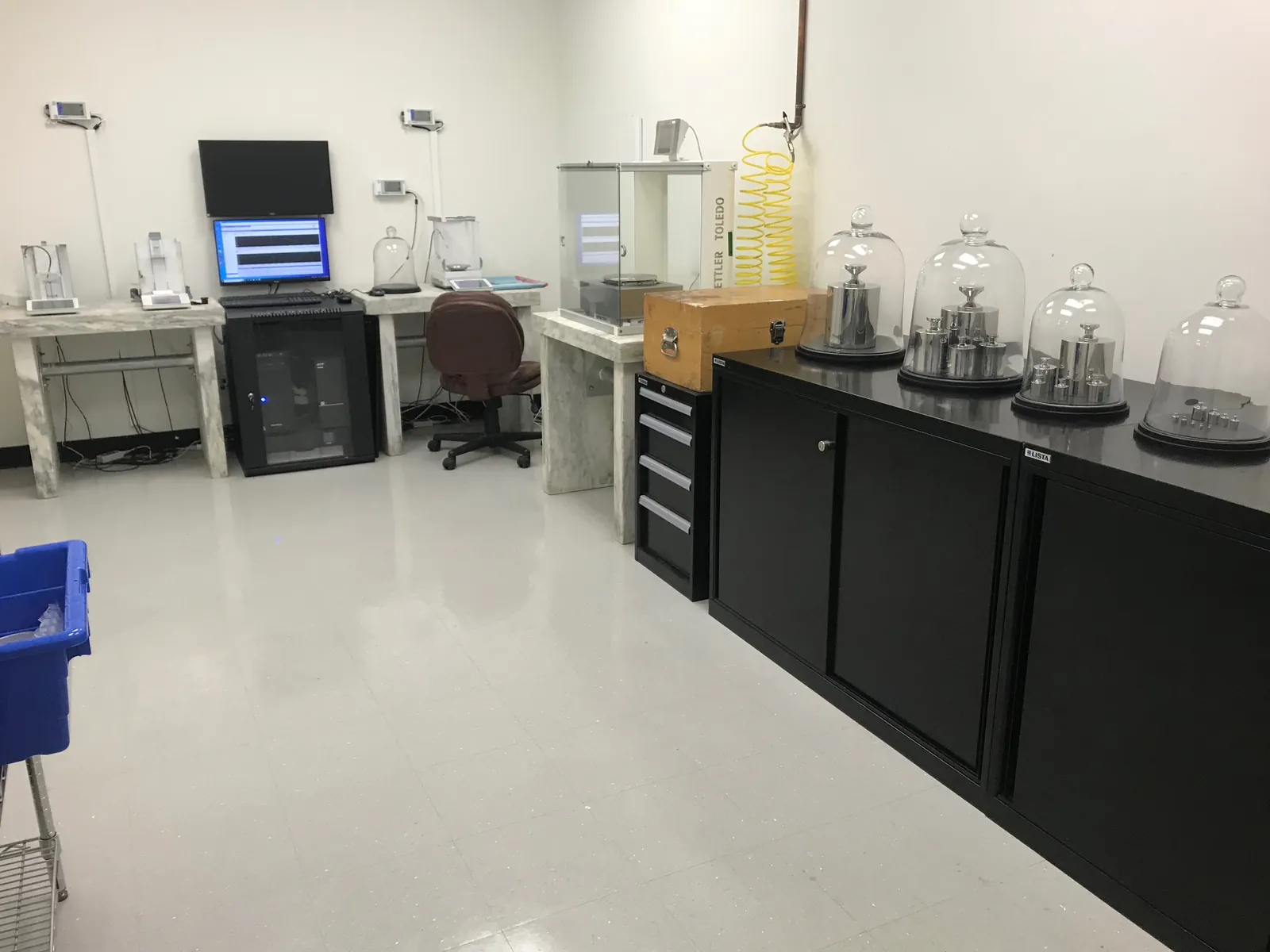
From a microgram analytical balance to a floor scale, calibration follows the same logic: challenge it with known masses and characterize how it responds — not just at one weight, but across its capacity.
Part of our guide to Mass, Force & Torque Calibration.
The checks that matter
A thorough calibration uses classified reference weights to verify accuracy at multiple points across capacity, linearity through the range, repeatability (same load, repeated), and eccentricity (load placed off-center). Together these characterize how the balance behaves in real use, not just at a convenient midpoint.
Why on-site is common
Balances are sensitive to leveling, drafts, and vibration, so moving one can change its behavior — which is why calibration is frequently performed on-site, where the balance actually operates, with the reference weights brought to it. The certificate reports data at each point with uncertainty. For analytical balances, environment control at the point of use is part of getting a trustworthy result.
Common questions
Do you calibrate balances at our facility?
Yes — because balances are sensitive to their environment, on-site calibration where the balance is used often gives the most representative result. Ask about on-site scale and balance service.