
Pressure, Temp & Environmental · 4 min read
Deadweight Testers and Pressure Comparators
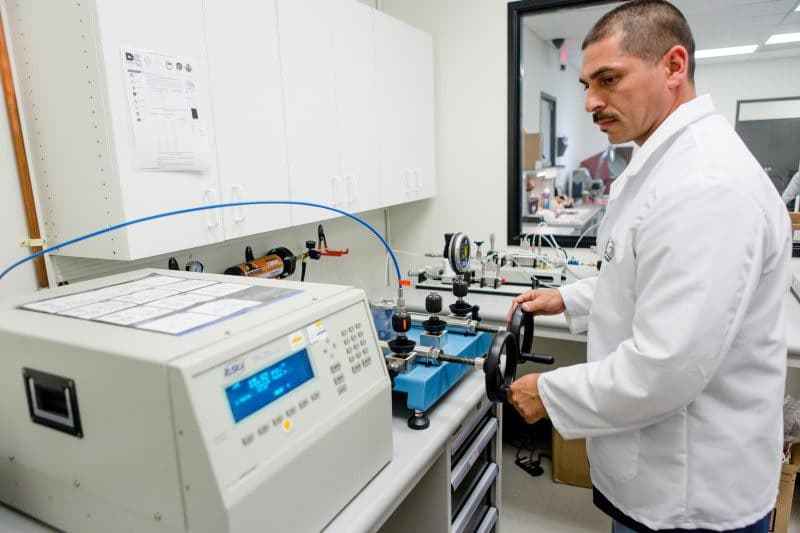
The deadweight tester is the gold standard of pressure — a beautifully simple instrument that turns known masses and a known area into a known pressure. It is also an instrument that itself must be calibrated.
Part of our guide to Pressure, Temperature & Environmental Calibration.
How a deadweight tester works
A deadweight (pressure balance) tester generates pressure by balancing calibrated masses on a piston of precisely known effective area. Because pressure equals force over area, the result is a highly accurate, traceable pressure that serves as a reference for calibrating gauges and transducers. Its accuracy depends on the masses, the piston-cylinder area, and corrections for local gravity, temperature, and buoyancy.
Calibrating the reference, and using controllers
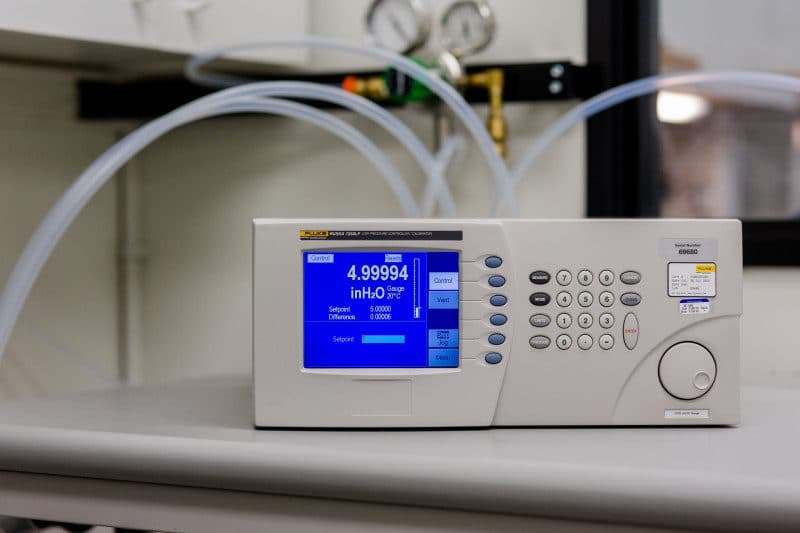
Even a deadweight tester needs calibration — its masses and piston-cylinder area are characterized and traceable, and it is recertified on an interval. For many applications, modern precision pressure controllers/comparators offer excellent accuracy with faster automated operation, and are chosen where throughput matters. The right tool depends on the accuracy and volume you need.
Common questions
Does a deadweight tester itself need calibration?
Yes. Its masses and piston-cylinder effective area are calibrated and traceable, and the instrument is recertified periodically. That is what makes the pressures it generates defensible references.