
Pressure, Temp & Environmental · 5 min read
Environmental & Thermal Chamber Mapping
A chamber’s built-in display tells you the temperature at one point. Mapping tells you what is happening in every corner where you actually store product — which is the number that matters.
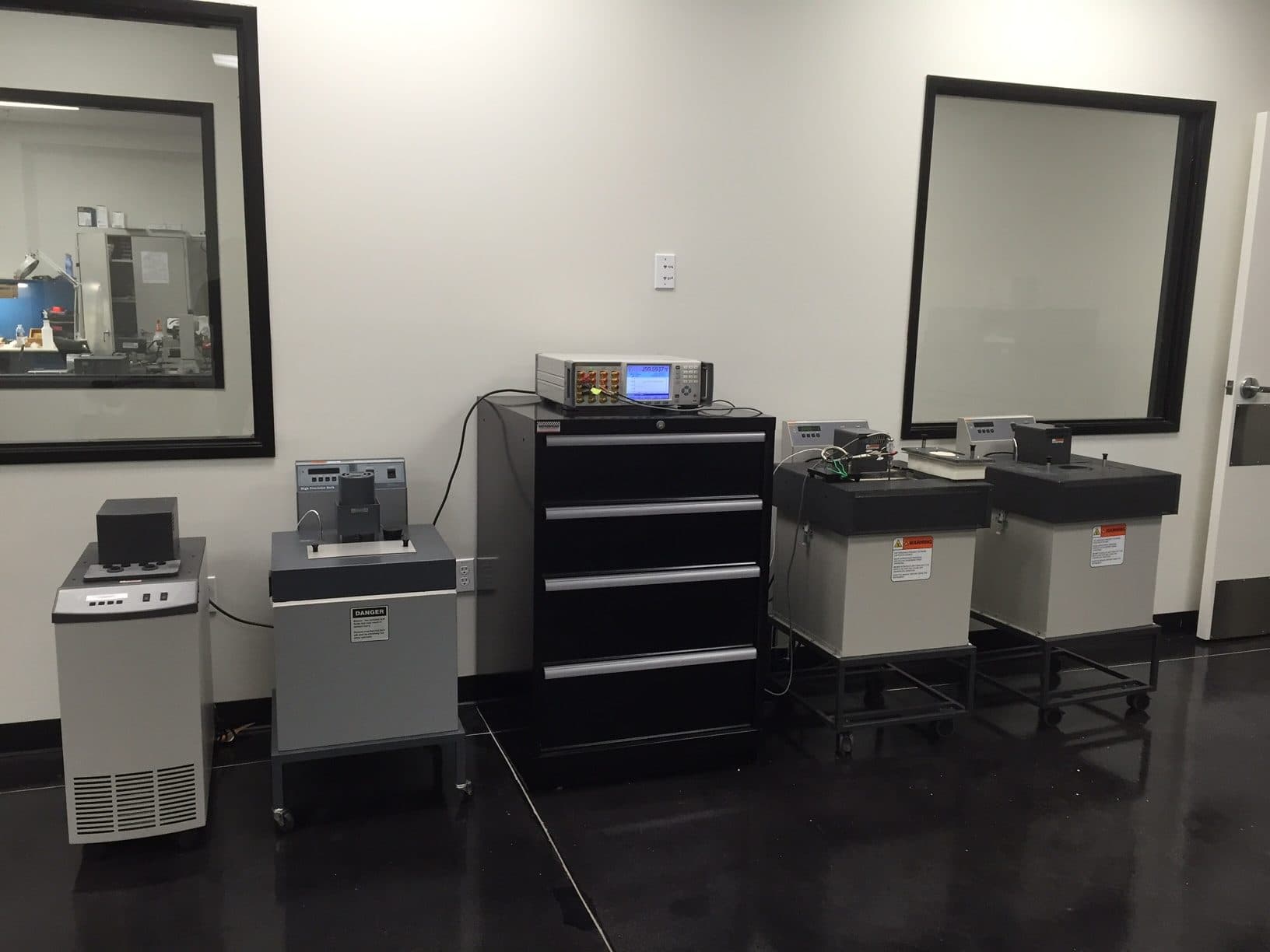
Part of our guide to Pressure, Temperature & Environmental Calibration.
What mapping measures
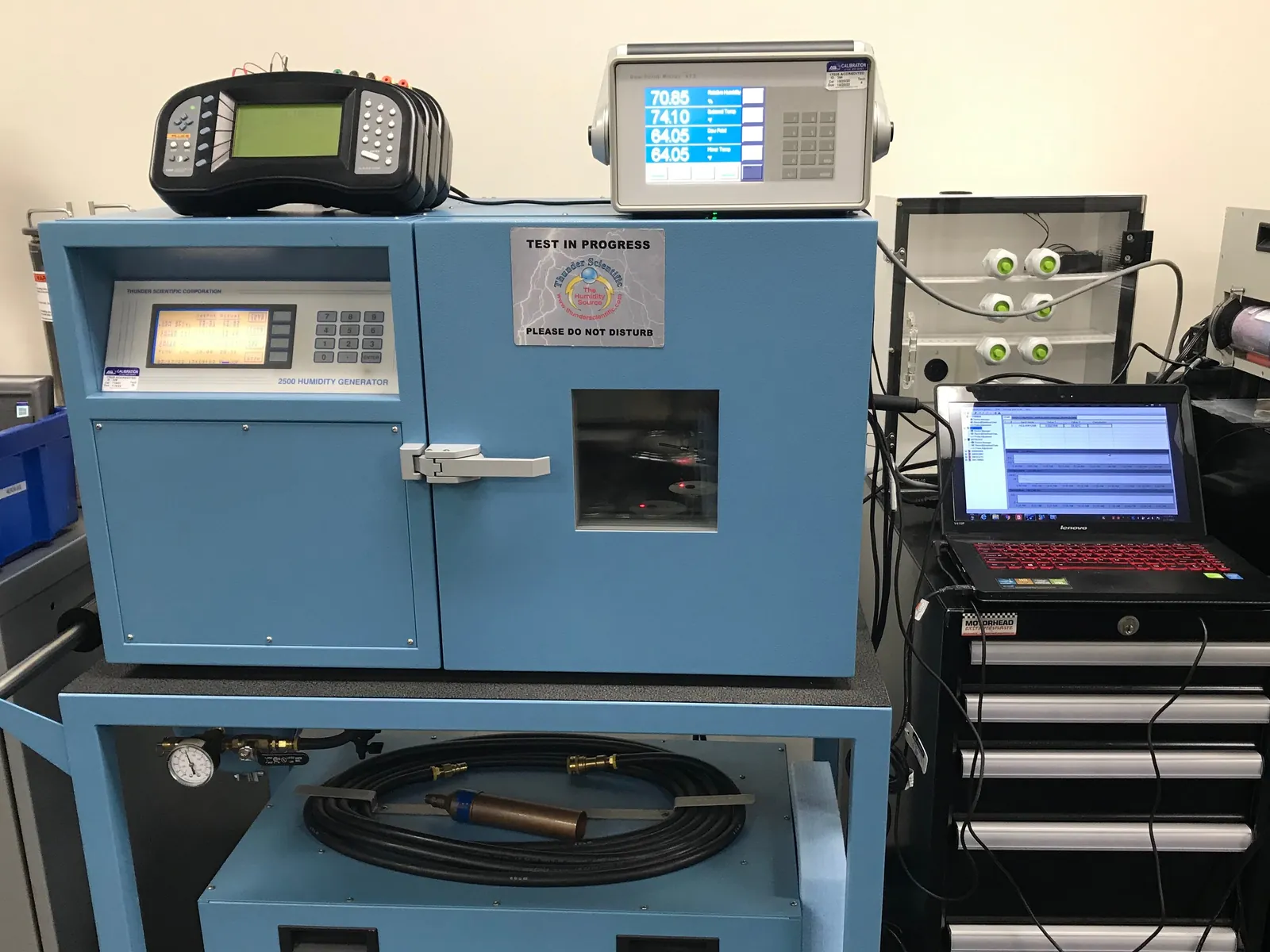
Chamber mapping distributes multiple calibrated sensors throughout the working volume and records temperature (and humidity, if applicable) over time, characterizing uniformity across space and stability over time — including recovery after door openings. The result identifies hot and cold spots and confirms the whole usable volume stays within specification, not just the point the controller senses.
Why regulated storage requires it
For pharmaceutical, medical, and biologic storage — stability chambers, refrigerators, freezers, incubators, ovens — mapping is the evidence that product was held under required conditions everywhere it sat. It is typically done on-site (the chamber does not move) with traceable sensors, and repeated periodically or after significant changes. The reference sensors, of course, must themselves be calibrated and traceable.
Common questions
How many sensors does a mapping study use?
It depends on chamber size and criticality — larger and regulated chambers use more sensors distributed to capture corners and center. The study is designed to prove uniformity across the actual usable volume.