
Pressure, Temp & Environmental · 4 min read
Humidity Calibration Explained
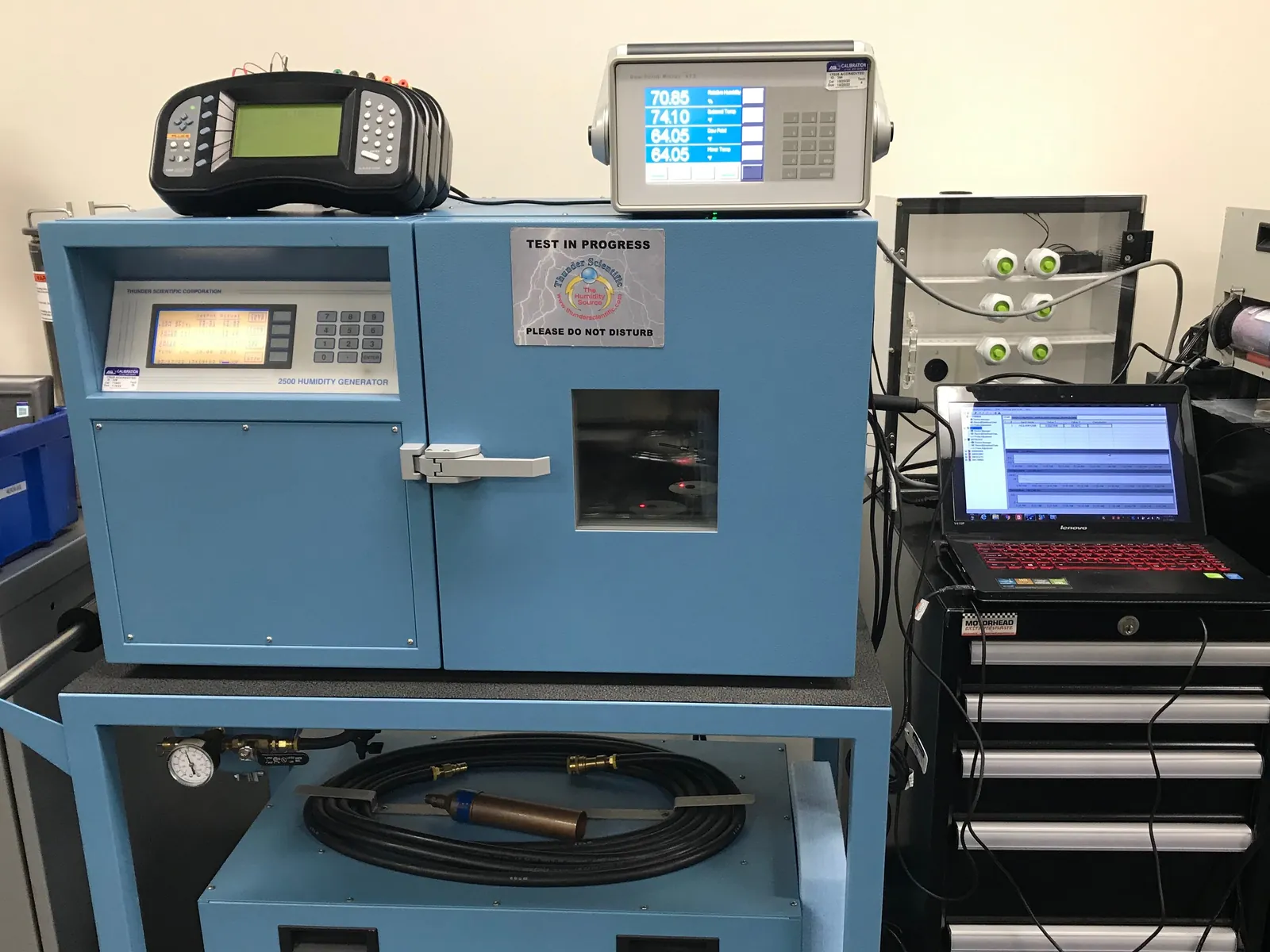
Humidity is trickier than it looks: it is inseparable from temperature, and generating a known, stable humidity is a real feat of engineering. That is why humidity calibration lives on specialized reference systems.
Part of our guide to Pressure, Temperature & Environmental Calibration.
Generating a known humidity
Humidity instruments are calibrated by placing them in a controlled environment at known relative-humidity points produced by a precision humidity generator (for example, two-pressure or two-temperature systems) with traceable reference measurement. Because relative humidity depends on temperature, the temperature is controlled and measured throughout — the two parameters cannot be separated.
Where it matters
Humidity accuracy is critical in pharmaceutical and medical storage, cleanrooms, environmental testing, and any process sensitive to moisture. Calibration reports the instrument’s deviation at each RH point with uncertainty, at the controlled temperature. For chambers, humidity is part of the mapping exercise covered separately.
Common questions
Why is humidity always tied to temperature?
Relative humidity is the ratio of water vapor present to the maximum the air can hold at that temperature — so it changes with temperature even if moisture content is constant. Calibration controls and reports temperature alongside RH.