
Dimensional Metrology · 4 min read
Surface Plates and Height Gauges
The granite surface plate is the flat, stable datum a whole layout depends on. If it is not flat, every measurement referenced to it inherits the error — quietly.
Part of our guide to Dimensional Metrology.
Flatness is the whole game
Surface plate calibration measures flatness across the plate (commonly to standards like ASME B89.3.7) using instruments such as electronic levels or autocollimators, reporting overall flatness and local variations. Plates wear unevenly where they are used most, so periodic flatness checks catch a developing low spot before it corrupts your layouts.
Height gauges ride on it
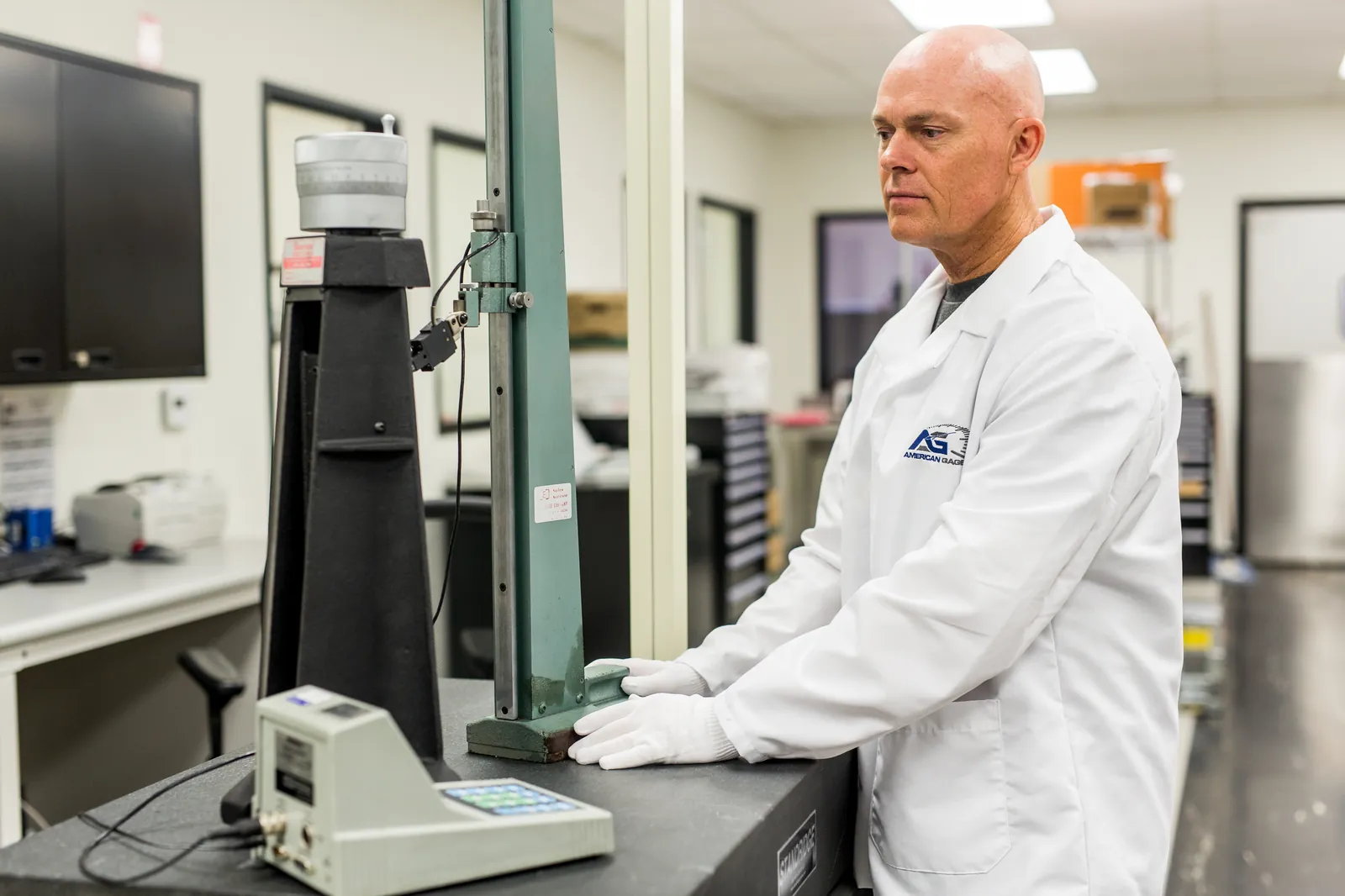
A height gauge measures vertical dimensions referenced to the surface plate, so its calibration and the plate’s flatness work together. Height gauges are calibrated against gauge blocks or step masters across their range, with data and uncertainty reported. Treat the plate and the gauges that use it as a system.

Common questions
Can surface plates be calibrated on-site?
Yes — surface plate flatness is typically checked where the plate sits, since moving a large granite plate is impractical. Ask about on-site surface plate service in your area.