
Measurement Uncertainty · 5 min read
How Temperature and Humidity Move Your Measurements
The reason precision labs are kept at a boring, constant 20 °C is not comfort — it is that temperature quietly changes the very things you are trying to measure.
Part of our guide to Measurement Uncertainty & Traceability.
Thermal expansion is the big one
Metals expand and contract with temperature, so dimensional measurements are referenced to 20 °C (68 °F) by international convention. A steel gauge block measured warm reads slightly long. This is why dimensional labs control temperature tightly and why the material’s coefficient of thermal expansion appears in serious uncertainty budgets.
Humidity and other effects
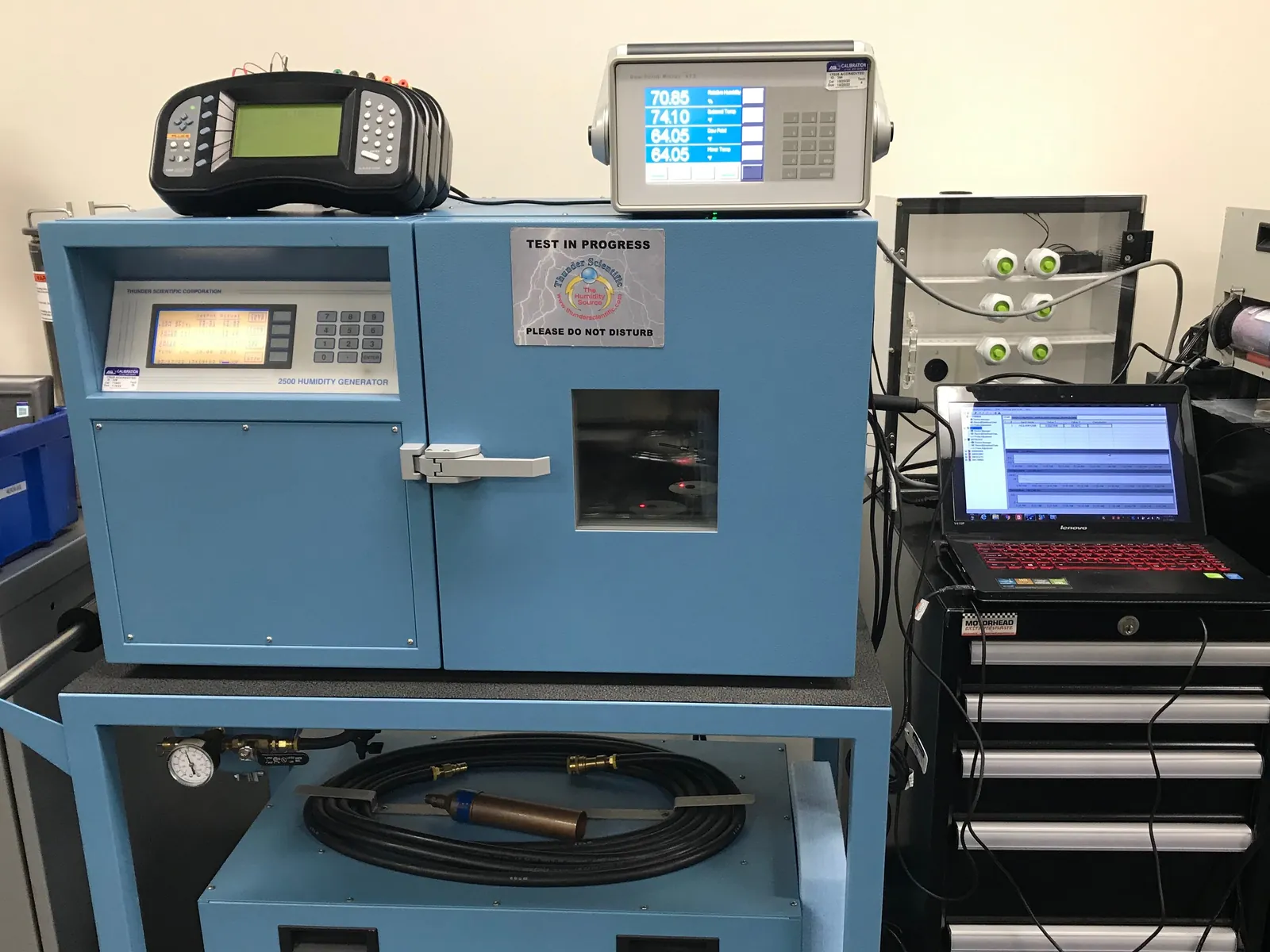
Humidity affects electrical measurements (insulation, surface leakage), certain mass measurements (air buoyancy and adsorption), and hygroscopic materials. Controlled, monitored environmental conditions reduce these effects and let the lab quantify the residual as an uncertainty contribution rather than an unknown error. It is why environmental control is a capability, not a decoration.
Common questions
Why 20 °C specifically?
It is the internationally agreed reference temperature for dimensional metrology, so measurements made anywhere can be compared. Labs correct or control to it and account for any deviation in uncertainty.